Networking protocols similar to or like ZMODEM File transfer protocol developed by Chuck Forsberg in 1986, in a project funded by Telenet in order to improve file transfers on their X.25 network. What does zmodem mean? A file transfer protocol that was very popular during the days of analog modem transmission between bulletin boards beca. Of the next part of the file that is required so that crash recovery can be easily implemented by the file transfer program if the transmission fails in the middle. Hi, You can try any of the UNIX/Linux websites,there they give the entire source code. You can ask for the minicom source code,this is a software application that is similar to hyper terminal that supports zmodem protocol. ZMODEM is a file transfer protocol developed by Chuck Forsberg in 1986, in a project funded by Telenet in order to improve file transfers on their X.25 network. PuTTY zmodem transfering file integration. Zmodem integration. Sz.exe and rz.exe binaries are available here.
- Zmodem Protocol Software
- Zmodem Protocol Program Scam
- Zmodem Protocol Specification
- Zmodem
- Zmodem Protocol Program Free
ZMODEM & Kermit File Transfer Client and file transfer Server
Serial Communication Software, unattended file transfer with zmodem, kermit protocol in Windows and DOS. Includes Client and Server. Scripting serial and tcp data communication and file transfer.
Automated and unattended file transfer with Zmodem and Kermit protocol. KERMIT and ZMODEM File Client & Server, Serial Communication Software, Windows and DOS.
ZMODEM & Kermit File Server

Retrieve files from server using ZMODEM file transfer protocol.
Retrieve files from server using KERMIT file transfer protocol.
Scripting serial ports and tcp data communication and file transfer. Automated and unattended file transfer with Zmodem and Kermit protocol.
Are you looking for automated and unattended file transfer with ZMODEM protocol ? |
ZMCS - File Server and Client
What is the purpose of this software ?
ZMCS(ZMODEM Client & Server ) is a file transfer utility for unattended, script-driven file transfers using the ZMODEM protocol or the KERMIT protocol between two computers or computer to machine.
Add easily KERMIT or ZMODEM file transfer capabilities to any existing application!
Ready to run! Collect any files from distance. Collect measurement data files, account files, text files, data base files, binary files and any other files using optimized well known file transfer protocols ZMODEM and KERMIT.
ZMCS is able to run asynchronous modem dial up connection and file transfer automated and unattended in background.
Use Modem, ISDN (CAPI) or TCP/IP to connect to the ZMCSserver and upload or download files (third party servers also supported).
ZMCS can establish a connection using an asynchronous Modem or a Direct Link (serial cable) or ISDN (CAPI) or TCP/IP and send and receive text and binary files using ZMODEM or KERMIT file transfer protocol.
ZMCS executes as a console program and can act as server or client working completely in background. In server mode it waits for a client to connect and handles the requests for sending or receiving files. In client mode it connects to a server and sends or retrieves files to or from the server.
In client mode it runs unattended until all files are sent or received. It then ends autonomous. In server mode it accepts client connections, receives files, transmits files and may be terminated, if no more needed, by an application or by the user.
ZMCS is no island solution. Both, the client and the server can communicate with third party software (e.g. Hyperterminal). So access is not restricted between ZMCS application but third party software can easily connect to the ZMCS Server and the ZMCS Client can connect to third party server when no other special specifications requiered (like login protocols etc.).
An ideal solution to synchronize files and directories between remote machines. Automate synchronization and backup jobs with scripts.
Zmodem Protocol Software
Features List
|
Zmodem Protocol Program Scam
How is it best started ?
ZMCS is usually started with a Batch file, a Script, Windows Autostart, as a scheduled task or from within a Windows application and runs completely and unattended in background. The client ends when done. The server runs endless until closed by the user or an application.
The software provides status information. All status information and printouts can be routed into a log file (informational mode) or disabled (quiet mode). A low level data trace function is offered as well.
ZMCS runs completely hidden and works in background without any visible window.
What commands and options does it offer ?
The ZMCS software is driven by command line parameters:
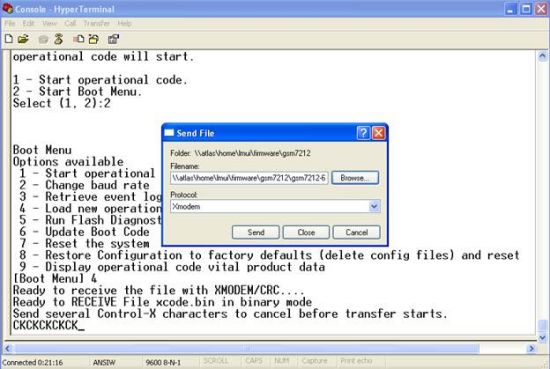
Zmodem Protocol Specification
| Examples:Return Codes: |
A complete description of functions and parameters and more samples can be found in the Manual.
Do I have to develop anything or do I need a SuperCom software in order to execute it ?
No, ZMCS is a ready to run application offering the described funtionality. You just copy it to the station you want to use it.
Does it support binary files ?
Yes, ZMCS can transmit text files and binary files.
Is it possible to run invisible in background ?
Yes, the ZMCS application can run completely hidden and in background without any visible window.
What security features does it offer ?
Restricted access to files
ZMCS can be configured to accept files only in the current working directory (parameter /W). Files to be transmitted or retrieved must be located inside the working directory. Thus protecting other directories. In order to redirect the working directory just attach a directory name to this parameter (e.g. /Wd:data).
User Control
The server can be configured to accept only authenticated user (/XL). Once set it expects from every client to authenticate itself by entering username and password. This mechanism also allows to specify a per user working directory, if required. Additionally but optionally, a computers user confirmation can be requested on every client login (/XLA).
What is this Job File ?
A Job File is similar to a script file. It contains commands to be executed while a client is connected. The Job File supports 'sections'. Currently a 'TX' and a 'RX' section supported. If no section specified a 'TX' section is assumed and all files are transmitted. 'RX' marks files to be retrieved.A Job File is a text file and can be created using a simple editor.
What is a Script File ?
A script file is similar to the known job file but since version 5 it can include a lot more than the #TX and #RX sections.
A script file can describe complex data communication sequences.
A script file may contain commands to transfer data or files, branches, control logical sequences and script flow, setup connection, perform anytime manual login, protocol switch, run loops and set variables, and many more.
From the ZMCS point of view, we can say that a script file is an extended version of the job file.
Thus, an easy way to develop data communication applications without using a compiler or IDE. An pure text editor is sufficient.A Script File is a text file and can be created using a simple editor.
Do I have to use a Script file ?
No. ZMCS can be controlled completely through the command line parameters.
The ZMCS script language enables, if required, to perform simple data transfers but also complex program logic. The ZMCS script language can be used as a supplementation or even as a self-sufficient application as it offers additional functions and sequences that cannot be performed through the command line parameters.
How can I connect using a third party software ?
The ZMCS in server mode supports the command /MsH, which disables the special handshake used. This way a third party application (i.e. Hyperterminal) can connect to the server.
Is it possible to add custom modem configuration ?
Yes. ZMCS is using the modem in a pretty standard way but in case custom modem options are required this can be easily entered.
What cable is required when connected directly without using a modem ?
For a direct connection to a computer or maschine without using a modem a 'Null Modem' cable is used. That type of cables are pretty standard and widely offered. The manual also provides information.
How to end a server using an external application ?
Assume that the server to terminate is running on COM3. In order to terminate the server we need to call ZMCS.EXE including the parameter /Mu plus the communication port number the server is using.
We can enter the following line manually or execute it from within any application in order to end the server running in background on COM3.
Zmodem
File transfer using multiple instances ?
Yes. Each instance uses a different serial port or TCP/IP address (IP:Port combination).
Is it possible to grab the ZMCS output directly into my application ?
Yes. The easiest way doing this is using a DOS pipe '<' redirecting to a file or to your application directly.
ZMCS also supports IPC (Interprocess Communication). A small IPC sample program demonstration this feature is also available in C/C++ source code.
Is it possible to grab the ZMCS output directly into my application ?
Yes. The easiest way doing this is using a DOS pipe '<' redirecting to a file or to your application directly.
ZMCS also supports IPC (Interprocess Communication). A small IPC sample program demonstration this feature is also available in C/C++ source code.
Can I use ZMCS for Serial and TCP on same PC ?
Yes, you can place the .exe files into different directories or under the same directory and name as 'zmcs_tcp.exe' and 'zmcs_seria.exe' to distinguish easier.
How many files do I need to run ZMCS ?
At least 'zmcs.exe' must be copied to the specific PC.
Zmodem Protocol Program Free
Finally, what do I get ?
|
Some areas of application
The ZMCS Client-Server software is ideal to be used in client-server applications and especially where fast and stable file transmission using ZMODEM or KERMIT protocol is required. It can be used to drop files or collect data files from remote stations or networks like: Point-of-Sale systems, Kiosk, Remote maintenance systems, retrieve data from Measurement Systems, Accounting Systems, Backup Systems etc.
Automate your backups from remote stations easily with ZMCS. Collect remote data files secure and easy without the need to develop special software.
The ZMCS own scripting language enables you, if required, to implement even complex tasks.
What to order ?
ZMCS for Windows (Serial or TCP/IP or ISDN) |
ZMCS for Linux (Serial) |
ZMCS for DOS (Serial, Version 3) |
Manual
The official manual. Read more ..
License Terms
Each PC requires one license. Read more ..
Customization
If you need any feature, please send eMail with details to get a FREE quotation.
Want to see how customer use ZMCS under Real World conditions ? Read more ..
Windows and Linux ZMODEM File Server -- Scripts for file transfer -- ZMODEM and Kermit Client -- Modem -- GSM/GPRS -- TCP/IP Connections -- Scripting Serial Port
HomeBack |
|
| Communication protocol | |
| Purpose | file transfer protocol |
|---|---|
| Developer(s) | Chuck Forsberg |
| Introduced | 1986; 35 years ago |
| Port(s) | None |
| Hardware | modems |
ZMODEM is a file transfer protocol developed by Chuck Forsberg in 1986, in a project funded by Telenet in order to improve file transfers on their X.25 network. In addition to dramatically improved performance compared to older protocols, ZMODEM offered restartable transfers, auto-start by the sender, an expanded 32-bit CRC, and control character quoting supporting 8-bit clean transfers, allowing it to be used on networks that would not pass control characters.
In contrast to most transfer protocols developed for bulletin board systems (BBSs), ZMODEM was not directly based on, nor compatible with, the seminal XMODEM. Many variants of XMODEM had been developed in order to address one or more of its shortcomings, and most remained backward compatible and would successfully complete transfers with 'classic' XMODEM implementations. This list includes Forsberg's own YMODEM.
ZMODEM eschewed backward compatibility in favor of producing a radically improved protocol. It performed as well or better than any of the high-performance varieties of XMODEM, did so over links that previously didn't work at all, like X.25, or had poor performance, like Telebit modems, and included useful features found in few or no other protocols. ZMODEM became extremely popular on bulletin board systems (BBS) in the early 1990s, becoming a standard as widespread as XMODEM had been before it.
Improvements[edit]
Streaming[edit]
Generally, file transfer protocols break down a file into a series of packets, and then send them one-at-a-time to the receiver. The main portion of the packet, the payload, is a certain number of bytes from the file being sent. After the payload comes a checksum or cyclic redundancy check (CRC) that can be used to determine if the payload was received correctly. If the packet is received correctly, the receiver sends an ACK message and the sender then starts sending the next packet.
The telephone system introduces a small delay known as latency that interferes with this process. Even if the receiver sends the ACK immediately, the delay in the phone lines means there will always be some time before the sender receives it and sends the next packet. As modem speeds increase, this delay represents a larger and larger number of packets that could have been sent during the delay, decreasing the channel efficiency.
XMODEM used 128-bytes payloads with a three-byte header and one-byte checksum for a total of 132 bytes per packet. In the era of 300 bps modems, a packet took about four seconds to send, and typical latencies were on the order of 1⁄10 of a second, so the performance overhead was not significant. As speeds increase the problem becomes more problematic; at 2400 bps a packet takes about 1⁄2 to send, so about 1⁄5 of the available bandwidth is wasted waiting for ACKs. At 9600 bps a packet requires only 0.13 seconds to send, so about 1⁄2 of the bandwidth is wasted.
One solution to this problem is the use of a sliding window. These protocols address latency by allowing the sender to continue sending a number of packets without waiting for an ACK. The number of packets that it allows to continue is the 'window', which was typically between two and sixteen packets in most implementations. A number of new versions of XMODEM with sliding window support appeared in the early 1980s.
Sliding windows are useful for latencies on the order of several packet lengths, which is the case for XMODEM on conventional phone lines. However, it is not enough to address longer latencies found on overseas phone calls or X.25 services such as PC Pursuit, where the latencies are on the order of a second or longer. In other cases, where the reverse channel was much slower than the sending one, as was the case for Telebit or US Robotics modems, even the small number of ACKs might overwhelm the return channel and cause the transfer to pause.
ZMODEM addressed these problems by removing the need for ACKs at all, allowing the sender to send data continually as long as the receiver detected no errors. Only NAKs had to be sent, if and only if there was a problem. Since ZMODEM was often used on links with built-in error correction, like X.25, the receiver would often not send a single message back to the sender. As a result, the system would send the entire file in a continual stream, and ZMODEM referred to itself as a 'streaming protocol'.
ZMODEM's performance was so improved over previous common protocols that it generally replaced even special protocols such as YMODEM-g, which included no error correction at all and instead relied on error-free links maintained by the modems. Although YMODEM-g was faster, the lack of other features such as restartable transfers made it less appealing.
Restart[edit]
XMODEM, and most protocols based on it, managed packet order by prefixing the data with a packet number from 1 to 255. Windowed versions used this packet number to indicate which packets had been received properly, or specify one that had not. Since the packets were 128 bytes long, this meant the maximum amount of data that could be transferred before the packet numbers rolled over was 32 kB.
ZMODEM replaced the packet number with the actual location in the file, indicated by a 32-bit number. This allowed it to send NAK messages that re-wound the transfer to the point of failure, regardless of how long the file might be. This same feature was also used to re-start transfers if they failed or were deliberately interrupted. In this case, the receiver would look to see how much data had been previously received and then send a NAK with that location, automatically triggering the sender to start from that point.
Auto-start[edit]
Auto-starting simplified management by allowing the sending machine to start the transfer. Previously the user had to first request the file from the sender, placing it into a 'waiting' state, then return to their local program and invoke a command to start the transfer. With auto-transfer, they simply requested the file, the sender would then automatically trigger the transfer in the user's program.
Variations[edit]
A number of modified versions of ZMODEM appeared. ZedZap was a variant of ZMODEM with 8 kbyte blocks for better performance on high-speed modems. LeechZmodem was a mischievous ZMODEM variant (among similar XMODEM and YMODEM derivatives) that cheated BBS download quotas. A backwards compatible extension of ZMODEM with 32 kbyte and 64 kbyte block lengths was created by ADONTEC in 2002 and 2007 to increase performance on high-speed error free connections like ISDN or TCP/IP networks.
The most notable ZMODEM implementations were from Chuck Forsberg's Omen Technology, Inc. These included DSZ (DOS Send ZMODEM), GSZ (Graphical Send ZMODEM), and the ubiquitous (l)rzsz for Unix variants.
In more current times, the developers of Synchronet have created a modern X/Y/ZMODEM implementation named SEXYZ, loosely based on the zmtx/zmrx package, which runs natively on Windows and Unix variants, supports long filenames and faster, more reliable data transfers. The ZMODEM implementation from SEXYZ has also been incorporated into the SyncTERM project. Synchronet, SEXYZ, and SyncTERM are all open-source, cross-platform, BBS-centric projects.
Forsberg himself collected a number of improvements into ZMODEM-90. The first of these is MobyTurbo, which removed control quoting to further improve performance, about 15%. Even on networks that 'eat' control characters, ZMODEM-90 can be tailored to quote only those characters the network actually eats, as opposed to every possible one. A similar improvement allows ZMODEM-90 to work on 7-bit networks, whereas earlier protocols (with the notable exception of Kermit) had all demanded 8-bits to one degree or another. Finally, ZMODEM-90 includes a basic run-length encoding compression system to further improve performance on uncompressed files.
Limitations[edit]
- Some of the ZMODEM packets (e.g. ZACK, ZRPOS) embed a byte-offset within the transferred file as a 32-bit unsigned integer. This design limits the feasibility of ZMODEM to only reliably transfer files that are under 4GB in size.
- Even though the protocol could permit it, the reference (l)rzsz implementation cannot encode arbitrary non-control characters (e.g. '~') which are often used by TCP/IP connection programs like telnet and ssh as client-side 'terminal escape' characters. Users must disable the terminal escape feature to achieve reliable transfers over these kinds of links, e.g. ssh -e none user@hostname.